
Written by Ann Marie Bankston
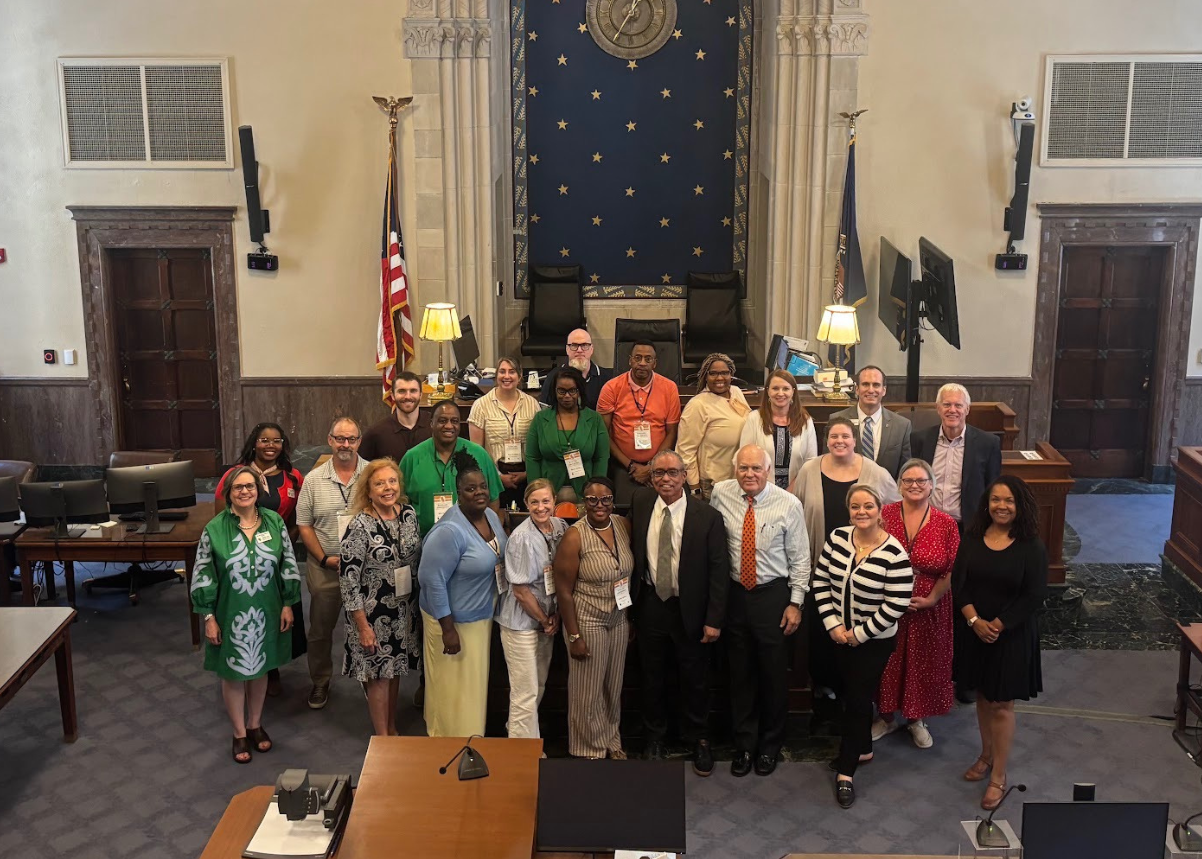
The Judge Frank M. Johnson, Jr. Institute was honored to host its fifth annual Scholars Conference from June 9–11, welcoming educators from across the nation to the historic Frank M. Johnson Courthouse. The conference provided teachers from a variety of disciplines—including history, government, science, and English—with opportunities to deepen their understanding of the judicial system and gain new tools and resources to bring back to their classrooms.
Throughout the three-day conference, participants engaged with distinguished attorneys, educators, and members of the federal judiciary. Sarah Love, FMJI Program Director, led interactive sessions focused on strategies to strengthen student learning, comprehension, and critical thinking. Steven Steinbach, editor of With Liberty and Justice for All?, explored the importance of teaching the Constitution and provided practical approaches for engaging students in meaningful discussions about civic principles and constitutional issues.
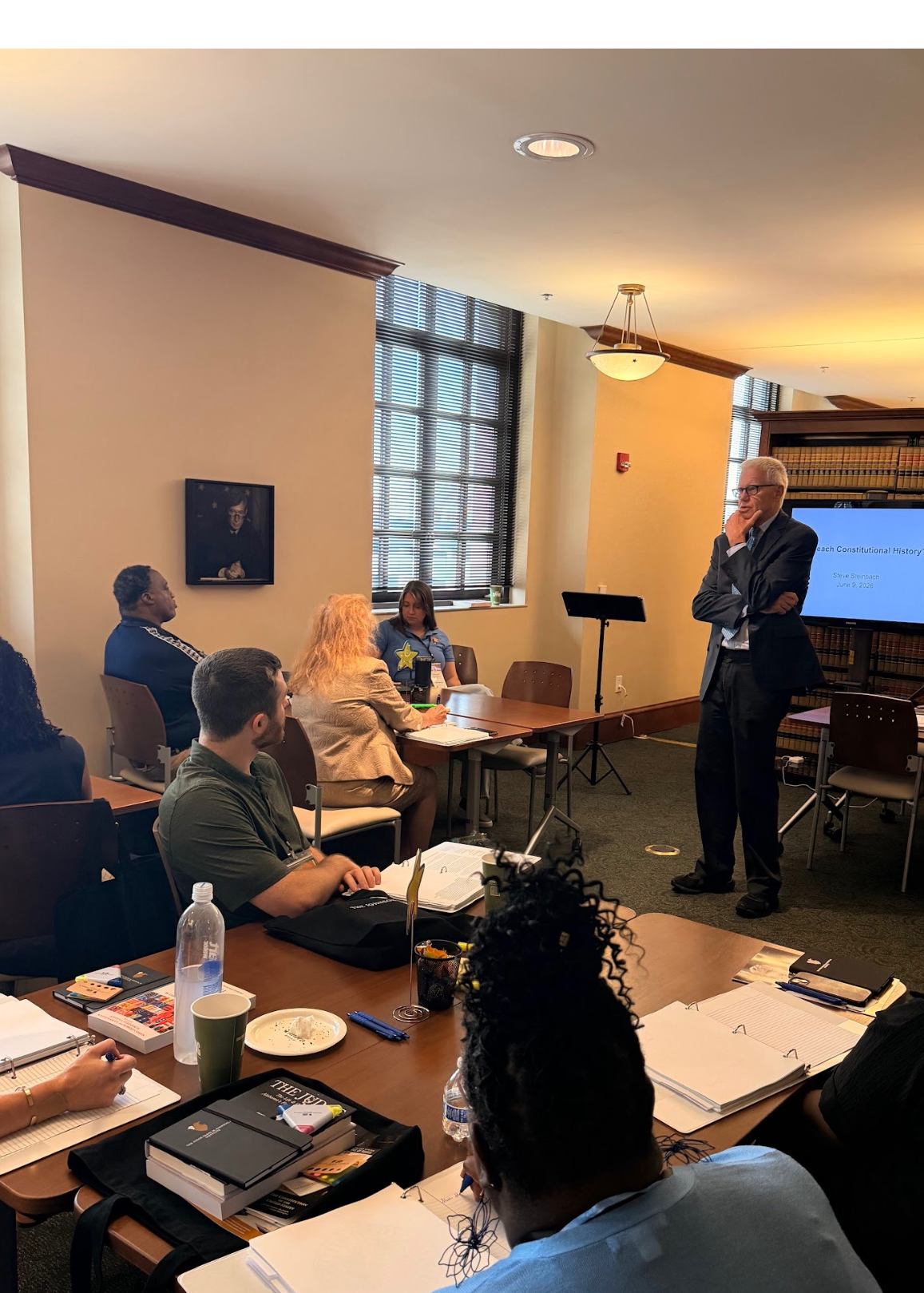
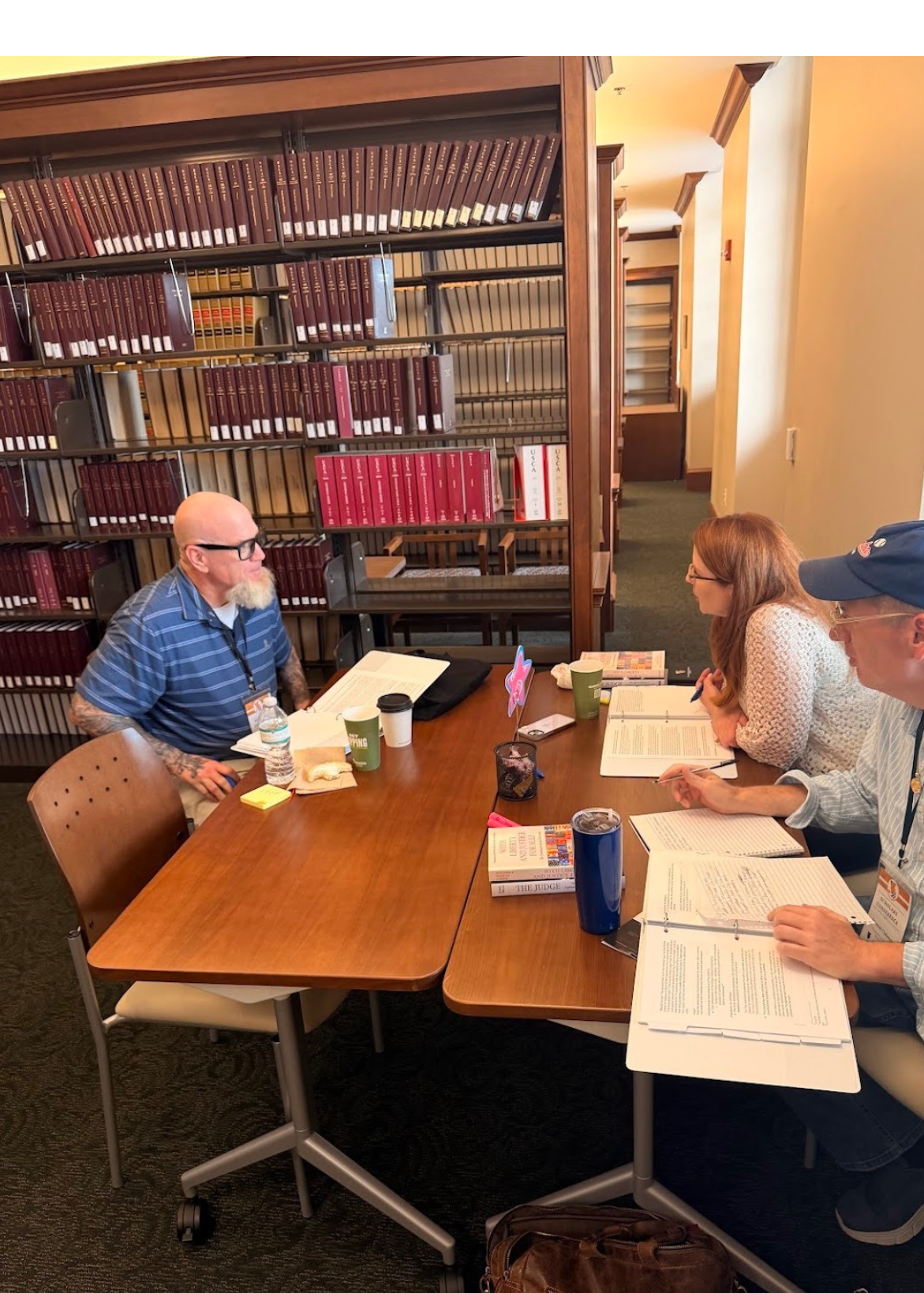
Educators also had the unique opportunity to learn directly from judges. U.S. Magistrate Judge Chad Bryan provided an overview of the federal court system, explaining the distinctions between state and federal courts, how cases move through the judicial process, and the vital role judges play in administering justice. U.S. District Judge Keith Watkins guided participants through landmark cases heard in the very courtroom where they gathered, highlighting their lasting impact on both the legal system and society. Teachers were able to ask questions, gain insight into the daily work of federal judges, and observe firsthand how the federal court system operates.
One of the conference highlights was the opportunity for participants to observe a federal sentencing hearing, offering a meaningful look at the judicial process in action.
Mr. John Baker, a history and government teacher from South Carolina who attended the conference, reflected on the experience, saying, “The conference exposes teachers to more than just professional development and structure. It teaches the empathy that you must have.”
On the final day, participants embarked on an educational field experience through several significant civil rights landmarks in Montgomery, including Dexter Avenue King Memorial Baptist Church, the Equal Justice Initiative Legacy Sites, the Freedom Rides Museum, and the Rosa Parks Museum. These visits provided valuable historical context and enriched the conference’s exploration of constitutional rights, civic engagement, and the ongoing pursuit of justice.
The Institute was proud to welcome such dedicated educators and looks forward to seeing the lasting impact these experiences, ideas, and resources will have on students in classrooms across the country.
Ann Marie Bankston is a summer intern at the Johnson Institute and a student at the University of Alabama-Birmingham.